



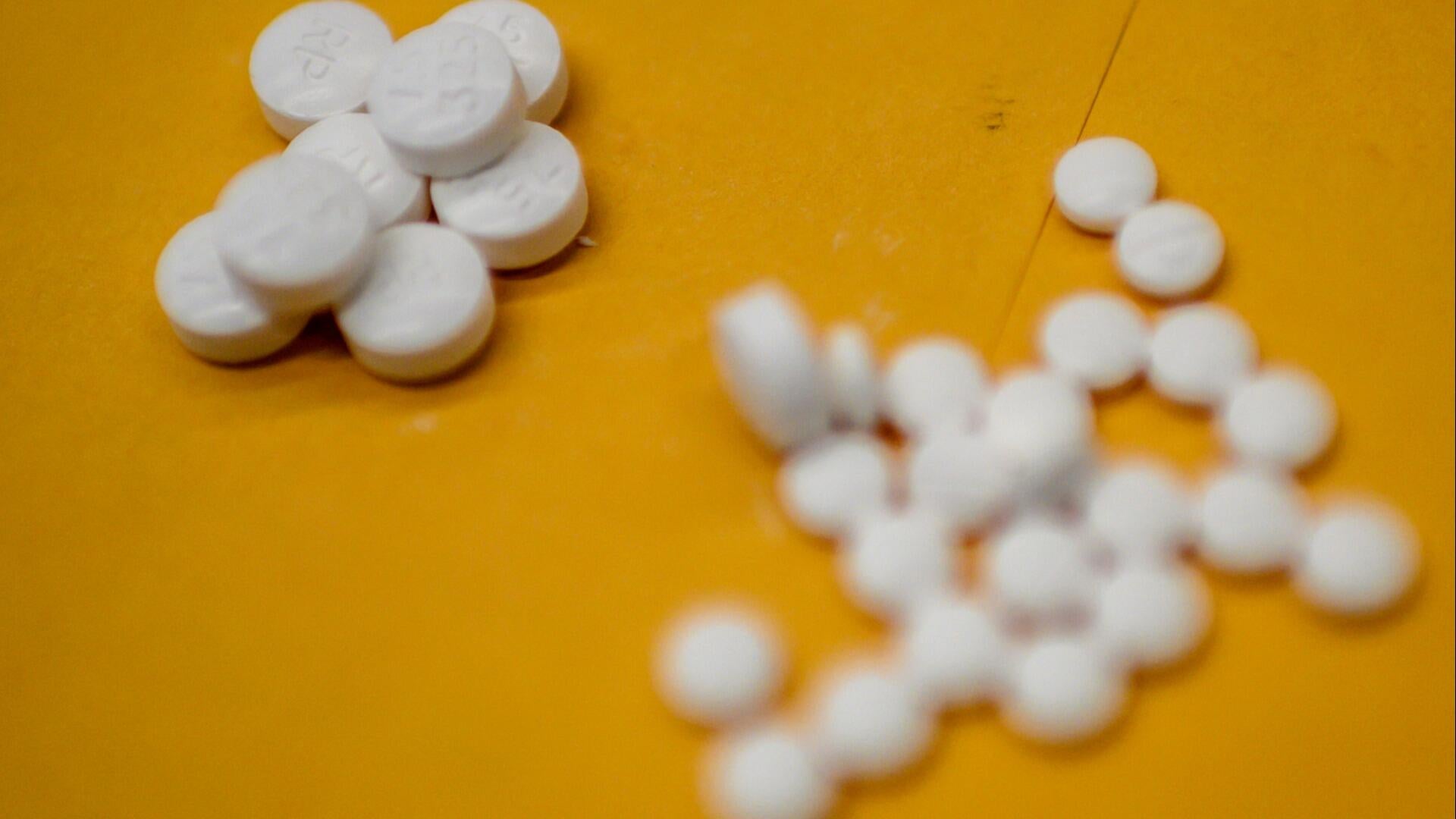
State and local governments spent about $3.7 billion in opioid settlement funds last year. That’s more than the median annual income of 42,000 American families combined.
The money comes from companies that were sued for aggressively pushing painkillers and fueling the opioid crisis.
Large amounts went to addiction treatment, recovery housing, and other initiatives that many public health researchers and families affected by the crisis agree fit the spirit of the settlements — to save lives and remediate the problem.
But other expenditures had tenuous ties to addiction, including:
- $150,000 for street lighting in Camden, New Jersey.
- $130,000 for Flock cameras in Carmel, Indiana.
- At least $84,000 for city insurance, building utilities, vehicle repairs, and other standard city expenses in Mullens, West Virginia.
- $36,200 for a pickleball court in Gilmer County, West Virginia.
KFF Health News uncovered these expenditures and about 17,500 others through a yearlong investigation with the Johns Hopkins Bloomberg School of Public Health and Shatterproof, a national nonprofit focused on addiction. The team filed public records requests, scoured government websites, and extracted expenditures, which were then sorted into categories such as treatment or prevention. The result is the most comprehensive national database documenting how opioid settlement money was used (or left unspent) in 2025.
The pot of settlement cash, which many addiction survivors and their advocates consider “blood money,” is expected to total about $60 billion over nearly two decades. It is split among state governments, counties, cities, and specially created opioid settlement councils in some places.
Although there are some spending guidelines within the settlement agreements, there is considerable flexibility, a vacuum of leadership and oversight, and significant gaps in how the public can track the dollars.
Much of the questionable spending — ranging from law enforcement gadgets to mundane municipal needs — happens at the county and city level, where local leaders often have no background in addiction policy and sometimes award the money to the first people who ask for it.
Nationwide, local decision-makers control nearly half the money, according to OpioidSettlementTracker.com, a site dedicated to following this cash. Proponents of local control say these officials know their communities best and are closest to the problem. But as dubious expenditures mount, some recovery advocates question if county and city officials are equipped to handle this once-in-a-generation opportunity.
“It shouldn’t be run by these politicians,” said Elizabeth Burke Beaty, a person in recovery and a New Jersey-based advocate who’s been following the opioid cash for years.
She said people directly affected by the crisis understand gaps in their local community care systems best and have the most insight into how funds can be used effectively. “This whole opioid settlement should be run by the people who’ve lost everything,” she said.
As executive director of the Sea Change Recovery Community and Harm Reduction Center in Ocean County, Burke Beaty sees those people daily. A woman who lost her brother and father to addiction and later landed in the hospital herself. An 11-year-old boy, holding his grandfather’s hand at an overdose awareness event, as they mourned a family member.
“This is money from dead people and people left behind,” Burke Beaty said.
Of course, many local officials have lost friends and family to the crisis as well, and many care deeply about putting the money to good use.
Unlike state officials, who have access to health departments with specific expertise and staff whose entire job is writing policy, local decision-makers often work with bare-bones support. They may juggle other jobs alongside their official duties and can be bombarded by aggressive sales tactics from companies that view the settlements as a gold rush. They must determine how to make an impact with opioid settlement cash while facing the sober reality of needing to balance a government budget, keep public schools running, and ensure roads are maintained.
Burke Beaty acknowledges these challenges and offers to work with many local leaders in her area, often writing letters, showing up at public meetings, and creating reports with detailed feedback on how localities spent the money.
But when these efforts go ignored, she wonders if it’s because of a lack of resources or “a lack of willingness to do the right thing,” she said. “Did this come from a place of ignorance or an ‘I don’t care’ place?”
Who should control the money?
It can be tempting to suggest state governments should oversee all the cash, especially as some debatable spending patterns emerge at the local level.
But that’s been tried before.
In the Tobacco Master Settlement of 1998, cigarette companies paid hundreds of billions of dollars to states, typically without county or city involvement. Ultimately, much of the money went to plugging budget gaps, and, over 20 years, less than 3% of tobacco settlement and tax-related revenue was directed to anti-smoking programs.
“It is not likely that whatever model we pick is going to work flawlessly,” said Philip Rutherford, who leads substance use strategy at the National Council for Mental Wellbeing, a nonprofit representing community mental health and addiction treatment organizations.
Splitting the opioid money with local governments offers some advantages, he added. They spend less on administrative costs, can pivot more quickly as the drug landscape changes, and can test innovations.
It’s also not unusual for local officials to involve themselves in areas in which they lack personal expertise, said Annie Qing, who oversees health and human services work at the National Association of Counties.
“There are a lot of county commissioners that are making decisions on roads that may not be construction experts,” Qing said. Their role is to seek out subject matter experts, combine their knowledge with what they know their community needs, and identify investments “that make the most sense for their county.”
For support in allocating opioid settlement cash, they can turn to universities, county associations, and national public health and policy groups.
Saving lives — but from overdose or cardiac arrest?
Still, it can be tricky to apply academic research and high-level principles to the messy, on-the-ground realities of settlement spending.
Take the case of automated external defibrillators, or AEDs. These portable electronic devices can save lives in the event of sudden cardiac arrest.
Last year, about 100 localities across 20 states committed $3.7 million in opioid funds to expenditures that included AEDs, cardiac monitors, and related accessories.
Many local leaders saw the purchases as saving lives from overdose, though the science doesn’t quite back them up.
Southfield, Michigan, purchased six Lifepak cardiac monitors and related supplies for about $350,000. Mayor Kenson Siver said overdose response has become increasingly complex, as people often use a mix of opioids and stimulants, and that paramedics need to be prepared for a range of situations.
Cardiac monitors go beyond traditional AEDs to measure how effectively someone is breathing, he said, which can help emergency responders determine if “interventions are working and identify deterioration or complications that require additional treatment.”
However, emergency medical responders say there’s a fundamental misunderstanding. AEDs and cardiac monitors are critical public health tools — but they are rarely used for opioid overdoses.
“I’m not saying that you never will, but the number is so low,” said Dalton Barrett, a paramedic in Edgecombe County, North Carolina, where he leads the post-overdose response team and oversees the county’s opioid settlement funds.
In opioid overdoses, people stop breathing. They typically need oxygen or naloxone, a medication that can reverse overdoses.
AEDs work only in cardiac emergencies and when the machine can detect a shockable heart rhythm — not common among overdose victims, Barrett said.
When jurisdictions buy AEDs with opioid dollars, they’re more likely plugging gaps in their general budget, which should be covering required ambulance equipment, he said. “I have a hard time identifying this as a particularly strong or targeted use of settlement funds.”
The only exception would be if a jurisdiction started a new ambulance team dedicated to overdose response and needed an AED to bring the vehicle to code, he said.
Generally, Barrett would prefer that opioid cash be spent hiring someone to follow up with people who have overdosed and connect them to treatment, housing, or other resources.
“People that suffer from addiction are looking for trust,” he said. “They’re not looking for fancy equipment.”
A lack of teeth
Some advocates are calling on states to rein in local governments’ spending from the settlements.
But no one is eager to take on that role. State officials don’t win friends by exerting control over local money. And, in some cases, they’re barred from doing so.
Jennifer Tourville is executive director of a University of Tennessee initiative that provides guidance to local governments on spending opioid cash. Her team’s work is funded by the state’s opioid abatement council.
“We aren’t permitted to tell counties what they can and cannot buy,” she said. “We try and provide guidance on the intent of the funds and what would be most impactful for their community.”
A few states have issued lists of items that opioid money cannot be used for, often called unallowable lists. They generally include law enforcement tools, such as body cameras and drones, as well as general emergency medical supplies, such as first aid kits and gloves.
But even those lists sometimes lack teeth.
For instance, Spencer County, Indiana, spent about $16,700 on eight new AEDs for its sheriff department — even though AEDs appeared on Indiana’s unallowable list, as they do on three other states‘.
When asked if there’d be repercussions for the county, the Indiana Commission to Combat Substance Use Disorder said the unallowable list was simply guidance.
“Statute does not grant the state any enforcement authority related to how local entities spend opioid settlement funds,” said Shelby Thomas, a spokesperson for the commission.
Spencer County leaders did not respond to requests for comment.
A similar situation occurred in Iowa.
Van Buren County used $1,000 in opioid cash to help build a recreational site with pickleball, bocce, and tennis courts. In a report to the state, the county said this would provide a youth-focused activity and prevent misuse of opioids — an argument that has been used by many jurisdictions to justify a broad set of expenditures, ranging from funding an ice skating rink to hosting sock hops and concerts.
When asked how the county determined this was an appropriate priority, county auditor Lisa Plecker said, “The use of the funds was reported to the Iowa Attorney General’s office, as required, and our justification” for it “was not questioned.”
However, the Iowa attorney general’s office doesn’t evaluate reports.
The office “does not sign off on funds used by the counties,” said Jen Green, a spokesperson for Attorney General Brenna Bird. “The office serves as the collector and holder of the counties’ reports.”
Such examples have frustrated advocates nationwide, who feel they are the only watchdogs for this cash.
Localities view this as “really easy money,” said Burke Beaty of New Jersey. Even if their spending seems inappropriate to public health experts and families affected by addiction, “legally they can do it.”
She’s hopeful that a bill recently introduced in her state could change that. It would require the New Jersey Department of Human Services, which already collects county and city reports on opioid spending, to review those reports and force localities to pay back any misused funds.
Without such oversight, people who care about the opioid cash fear the nation is set to repeat the mistakes of the tobacco settlement — and foreshadow pitfalls for the social media settlements.
Read the methodology behind this project and download the data.
KFF Health News’ Rachel Spears; Shatterproof’s Kristen Pendergrass, Kelly Collins, and Mary Coyne; and the Johns Hopkins Bloomberg School of Public Health’s Abigail Winiker, Benjamin Eidman, Olivia Allran, Katibeth Blalock, Isha Desai, Saathvika Diviti, Joseph Olasupo, Veronica Steck, Amy Lund Stone, Erin Wang, and Lillian Williams contributed to the database featured in this article.
KFF Health News is a national newsroom that produces in-depth journalism about health issues and is one of the core operating programs at KFF — the independent source for health policy research, polling, and journalism.
The Johns Hopkins Bloomberg School of Public Health has taken a leading role in providing guidance to state and local governments on the use of opioid settlement funds. Faculty from the school collaborated with other experts in the field to create principles for using the money, which have been endorsed by over 60 organizations.
Shatterproof is a national nonprofit that addresses substance use disorder through distinct initiatives, including advocating for state and federal policies, ending addiction stigma, and educating communities about the treatment system.
Shatterproof is partnering with some states on projects funded by opioid settlements. KFF Health News, the Johns Hopkins Bloomberg School of Public Health, and the Shatterproof team that worked on this report are not involved in those efforts.